


Recessed Outlets
When people search for “recessed outlets,” they usually mean recessed wall outlets. They want a cleaner look behind a wall mounted TV, a floating credenza, a bed headboard, or a tight hallway where a standard plug sticks out too far. That is a totally valid use case, and recessed wall outlets are popular for a reason.
At the same time, recessed outlets come in several forms. In modern homes and high end remodels, you will also see recessed floor outlets, recessed work surface outlets, and recessed countertop outlets. Each one solves a different problem, so choosing the right category matters.
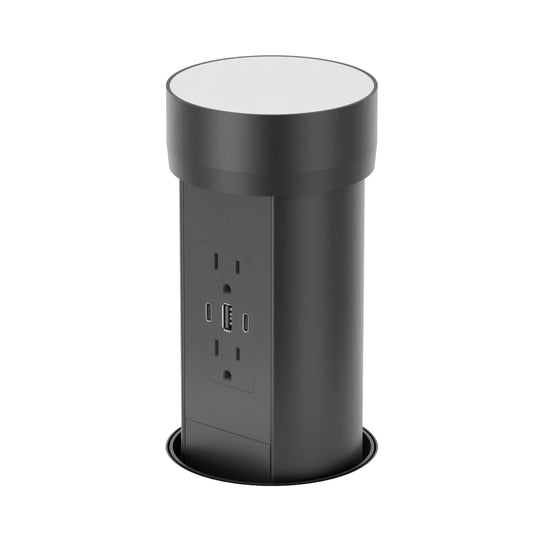
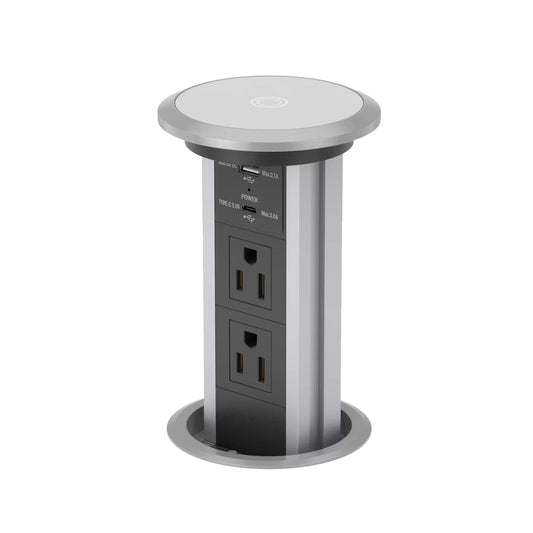
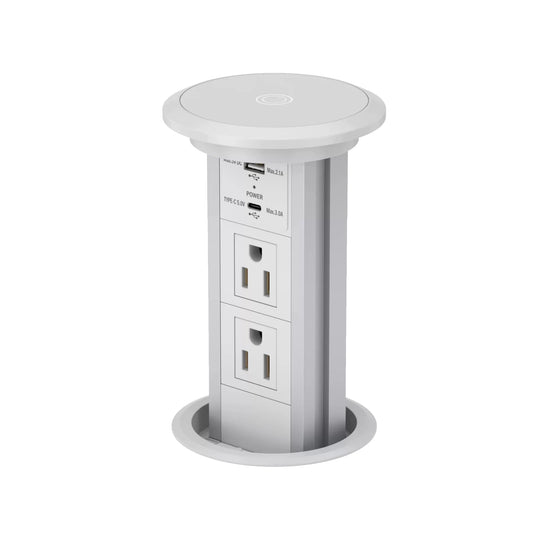
Modern Power Solutions focuses on recessed countertop outlets for kitchens and islands in the United States. These are the outlets designed to sit flush, stay visually minimal, and provide power exactly where people prep food, charge devices, and use small appliances. Many models rise with a push or a button press, then retract back down when you are done.
If you are new to this category, start here: Pop Up Counter Outlets: Everything you need to know.


What is a recessed outlet?
A recessed outlet is any receptacle that sits set back from the surrounding surface, instead of projecting outward. In plain terms, the face of the outlet is either flush or slightly below the finished surface. That “set back” design helps reduce clutter, prevents plugs from sticking out, and often improves safety and durability in high traffic areas.
Recessed outlets are commonly grouped into three practical categories: recessed wall outlets, recessed floor outlets, and recessed countertop or work surface outlets. Some products combine “recessed” with “pop-up,” meaning the outlet stays recessed most of the time and only rises when you need it.
The most common intent: recessed wall outlets
Recessed wall outlets are the classic solution for “I need this plug to disappear.” People typically install them behind wall mounted TVs, in media walls, behind art frames, or behind furniture where a standard plug creates an awkward gap. They also help reduce cable strain because the plug does not have to bend sharply against the wall.
Where recessed wall outlets shine
- Behind wall mounted TVs and soundbars
- Media cabinets and built-ins
- Bed headboards and tight bedroom layouts
- Floating shelves or wall niches where depth is limited
What to watch for with wall outlets
First, confirm depth in the wall cavity, especially if you are working around masonry, thin studs, or a fireplace chase. Next, plan cable routing for power and low voltage so it stays neat and serviceable. Finally, use a licensed electrician and follow local code requirements for your area.
Recessed floor outlets: clean power where walls are far away
Recessed floor outlets are popular in open plan rooms and commercial spaces, where furniture floats away from walls. They bring power to couches, conference tables, or showrooms without cords running across walkways.
Where recessed floor outlets shine
- Living rooms with a floating sofa layout
- Home offices with a centered desk
- Conference rooms and boardrooms
- Retail displays and showrooms
Floor installations demand extra planning. You need the right floor box, the right cover system, and careful attention to moisture, cleaning routines, and foot traffic. This is not a place to cut corners.
Recessed countertop outlets: the modern kitchen solution
Kitchen design has changed. Islands became bigger, cooking appliances became more common, and people started treating the kitchen as a social and working space. As a result, power access matters more than ever.
However, homeowners also hate visual clutter. A standard wall outlet does not belong on a waterfall stone island, and a power strip on the counter looks cheap. That is why recessed countertop outlets have become a go-to solution in the USA, especially in higher end kitchens.
Two main styles for countertops
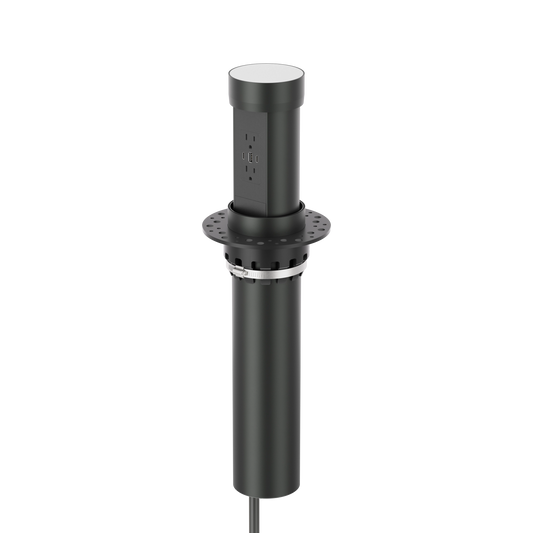
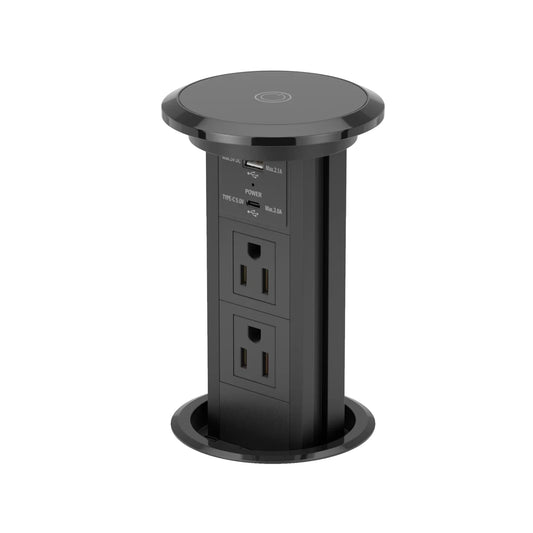
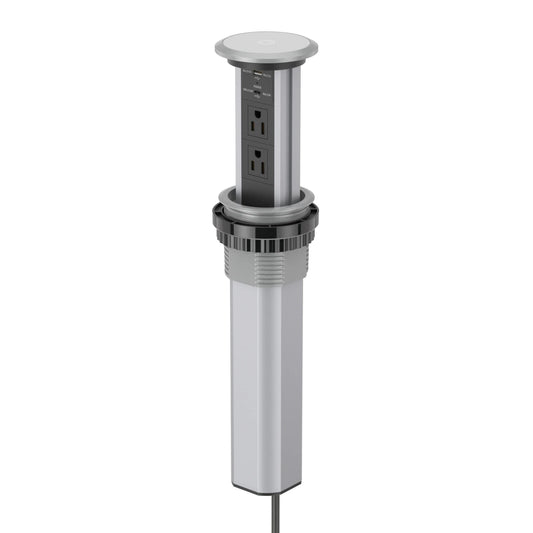
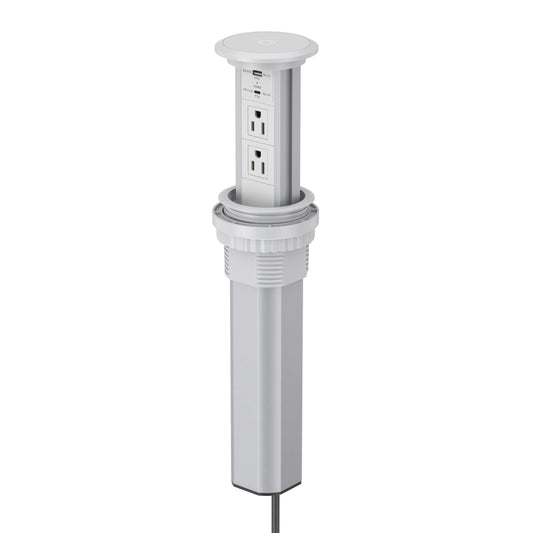
1) Flush recessed pop-up outlets. These sit flush in the countertop and remain closed when not in use. When you press the top or a button, the receptacles rise for access. This is the style most people mean when they want a “recessed outlet for a kitchen island.”
2) Low profile recessed covers. Some countertop solutions stay recessed under a lid or cover system. They can look clean, but the day-to-day experience depends heavily on the cover design, spill handling, and how comfortable it is to plug and unplug appliances.
Why recessed countertop outlets are worth it
- Cleaner visual lines. You keep the island or counter minimal, especially on stone tops.
- Practical access. Power sits where you actually use appliances and chargers.
- Less clutter. You reduce reliance on power strips and extension cords on the counter.
- Better layout freedom. You can design the kitchen around function, not around a wall outlet location.
USA safety and compliance: what matters for countertop outlets
In the United States, countertop receptacles have specific requirements. Not every “pop-up” or “recessed” device is suitable for permanent installation in a kitchen countertop. This is one of the biggest sources of confusion for homeowners and designers.
As a general rule, a true countertop receptacle assembly is evaluated for installation in kitchen or bathroom countertops and is intended to meet NEC requirements for countertop installations. Many compliant products are tested for spill resistance, including exposure to a half-gallon liquid spill test requirement associated with NEC countertop use cases.
If you want a deeper overview, Modern Power Solutions also breaks this down here: Pop-up outlets: the must-have kitchen feature you didn’t know you needed.
Practical checklist before you buy any “recessed countertop outlet”
- Confirm the intended installation. Countertop, work surface, or furniture applications are not the same category.
- Confirm listing and standard. Look for credible certification and the right intended use case for kitchens.
- Plan GFCI protection where required. Kitchens and islands often require GFCI protection in the USA.
- Think about spills. Real kitchens have water, oil, and cleaning products. Your outlet needs to handle that reality.
- Check clearance below the counter. Drawers, pull-out bins, plumbing, and bracing can block installation.
Recessed countertop outlets from Modern Power Solutions
Modern Power Solutions specializes in recessed countertop outlets for the United States. Our range includes designs that sit flush when closed, then rise for access with a press or button action. Choose based on how seamless you want the top to look, how often you plan to use it, and the type of kitchen install you are doing.
Point Pod: a seamless recessed outlet for premium stone countertops
If your priority is a truly high end look, the Point Pod range is designed to blend into the countertop. The integrated top approach helps the outlet visually disappear into the bench when closed.
- Point Pod Connect (Black)
- Point Pod Connect (Silver)
- The Point Pod: Ultimate Pop Up Outlet
- How to Install the Point Pod
V3 motorized range: modern recessed power with a button press
If you want the convenience of motorized lift, explore the V3 motorized pop-up outlet range. These models are designed for a clean look and a smooth open and close experience.
V15 range: simple push action with a smooth lift
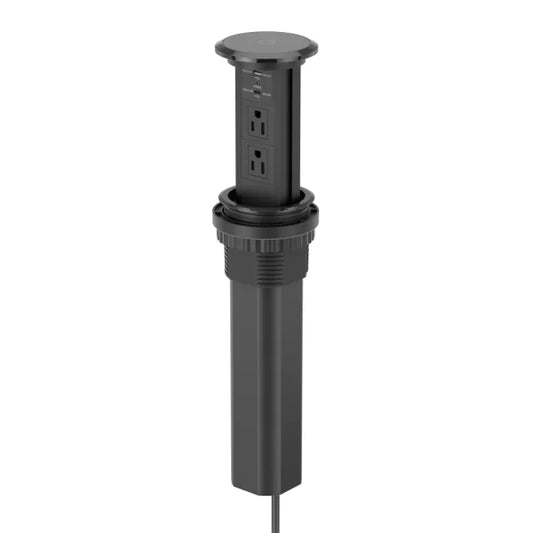
If you prefer a straightforward “push to rise, push to lower” experience, the V15 range is built around a smooth mechanical lift style that suits many everyday kitchen installs.
Hubbell countertop receptacles: a proven recessed countertop category
Some customers want a well-known manufacturer and a classic countertop pop-up form factor. In that case, see the Hubbell Tri-Power Countertop Pop-Up Receptacle.
Design tips for recessed outlets in kitchens
Placement that works in real life
- Place power where you prep, not where it looks good in a rendering.
- Avoid placing directly beside the sink or in splash zones.
- Keep clear of undermount sink bowls, waste systems, and drawer stacks below.
- If the island is also seating, consider how cords will drape and where devices will sit.
Match the outlet to your countertop style
For stone, engineered stone, and premium surfaces, a seamless or trimless look often feels best. If you are building a clean modern kitchen, consider reading: Trimless Electrical Outlets.
Frequently asked questions about recessed outlets
Are recessed outlets the same thing as pop-up outlets?
Not always. “Recessed” describes how the outlet sits relative to the surface. “Pop-up” describes the mechanism. Many countertop models are both recessed and pop-up because they stay flush when closed and rise when you need power.
Can I use a recessed wall outlet in a countertop?
No, not as a like-for-like swap. Wall outlets and countertop outlets are different products designed for different conditions. Countertops deal with spills, cleaning, and upward-facing access. Use a product intended and listed for countertop installation.
Do recessed countertop outlets need an electrician?
Yes, you should use a licensed electrician for permanent electrical work. Countertop receptacle assemblies also require correct placement, protection, and installation practices.
What is the cleanest looking recessed countertop outlet?
If your goal is to make the power disappear into the surface, start with the Point Pod. It is designed to integrate into premium kitchen finishes and keep the top looking intentional.
Next steps
If you are choosing between recessed wall outlets and recessed countertop outlets, think about where you actually use power. For TVs and furniture against a wall, recessed wall outlets usually win. For islands, peninsulas, and kitchen work zones, recessed countertop outlets are often the most practical and visually clean option.
Browse Modern Power Solutions recessed countertop options here: Modern Power Solutions.
Want a quick starting point? Visit: Pop Up Counter Outlets: Everything you need to know.
Note: Always confirm local electrical requirements and use a qualified electrician for installation.
